
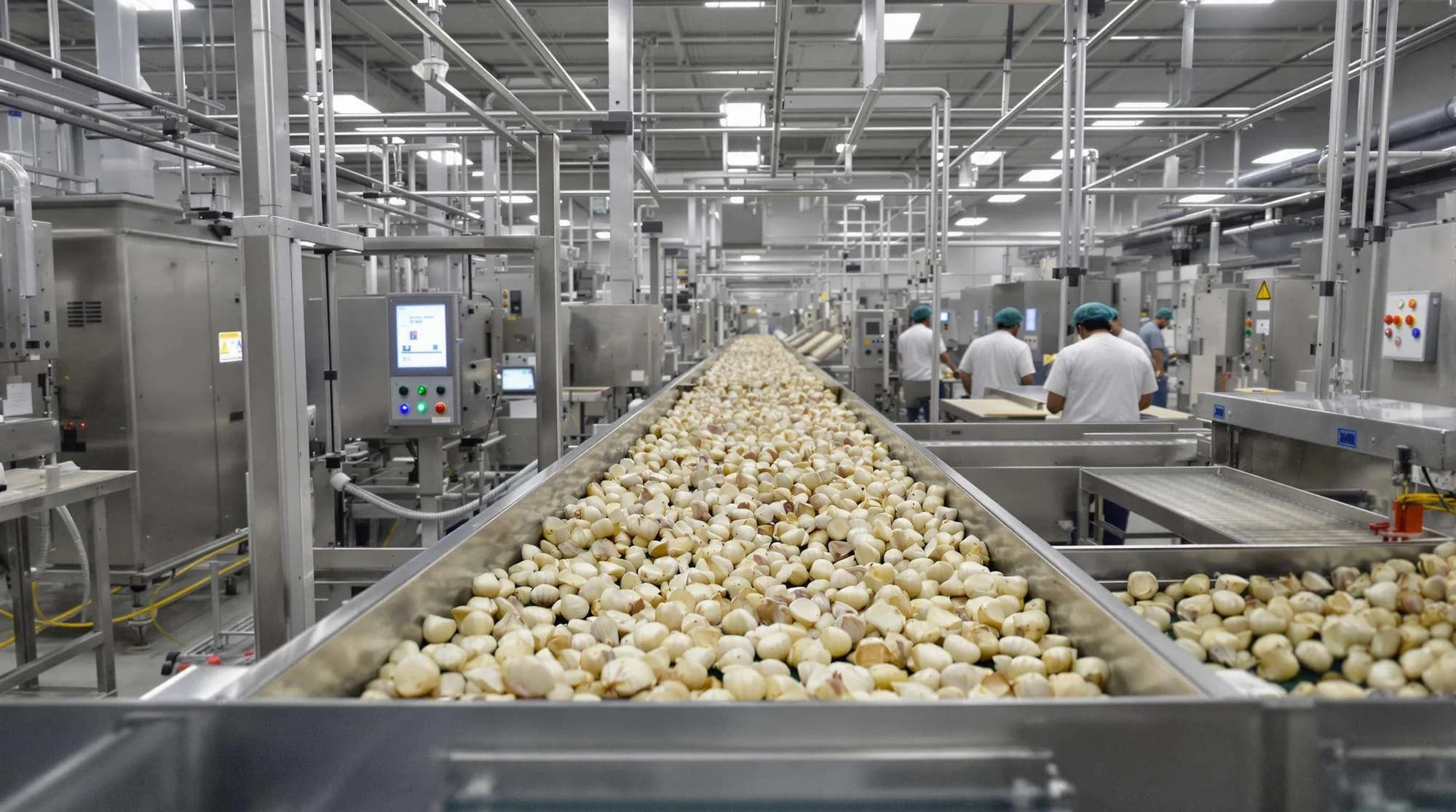
How Peeled Garlic Is Processed: From Fresh Bulbs to Ready-to-Use Cloves
How does fresh garlic become a ready-to-use ingredient for commercial kitchens? Follow the peeled garlic processing journey — from raw bulb selection and peeling to inspection, hygienic handling, packaging, and distribution.
Peeled garlic is widely used in restaurants, catering businesses, central kitchens, and food manufacturing operations.
Unlike whole garlic bulbs, peeled garlic arrives with the outer skin already removed, allowing kitchen teams to proceed directly to chopping, mincing, slicing, or cooking.
But how does fresh garlic become a ready-to-use ingredient for commercial kitchens?
Understanding the general peeled garlic processing journey helps food businesses appreciate the importance of raw material selection, hygienic handling, quality control, and packaging.
Step 1: Selecting Fresh Garlic Bulbs
Commercial peeled garlic production begins with the selection of suitable raw garlic.
Processors typically assess garlic bulbs based on their condition, size, firmness, and overall quality.
Bulbs showing excessive damage, decay, or other unacceptable defects are removed during inspection.
Raw material quality is important because peeling cannot improve garlic that has already deteriorated.
Careful selection helps create a more consistent finished product.
Step 2: Separating Garlic Bulbs into Individual Cloves
After initial sorting, whole garlic bulbs are separated into individual cloves.
This step prepares the garlic for peeling.
Depending on the facility, clove separation may be performed manually or with specialised equipment.
The objective is to separate the cloves while minimising damage.
Excessive breakage can affect appearance, handling, and suitability for certain food applications.
Step 3: Removing the Garlic Skin
Garlic peeling can be performed using different methods.
Some commercial facilities use mechanical systems that loosen and remove the dry outer skin.
Other operations may combine equipment with manual handling, depending on production scale and product specifications.
Air-assisted peeling equipment is one example of technology used in commercial processing.
The appropriate method depends on the processor's equipment, garlic variety, and desired finished product.
The goal is to remove the skin efficiently while preserving the quality of the cloves.
Step 4: Sorting and Quality Inspection
Once the garlic has been peeled, the cloves are inspected for visible defects.
Quality checks may identify:
- Remaining garlic skin
- Damaged or broken cloves
- Discolouration
- Signs of spoilage
- Foreign materials
- Cloves that do not meet product specifications
Sorting may be performed manually, mechanically, or through a combination of methods.
Food businesses purchasing peeled garlic should understand the quality specifications offered by their suppliers.
Step 5: Cleaning and Hygienic Handling
Food hygiene is essential during peeled garlic processing.
Because the protective outer skin has been removed, the cloves require careful handling to minimise contamination risks.
Processors should use suitable food-contact equipment, appropriate sanitation procedures, and trained personnel.
Where washing or other cleaning treatments are used, these should follow validated food safety procedures.
Effective hygiene management also includes monitoring equipment cleanliness, employee practices, and the processing environment.
Step 6: Packaging Peeled Garlic
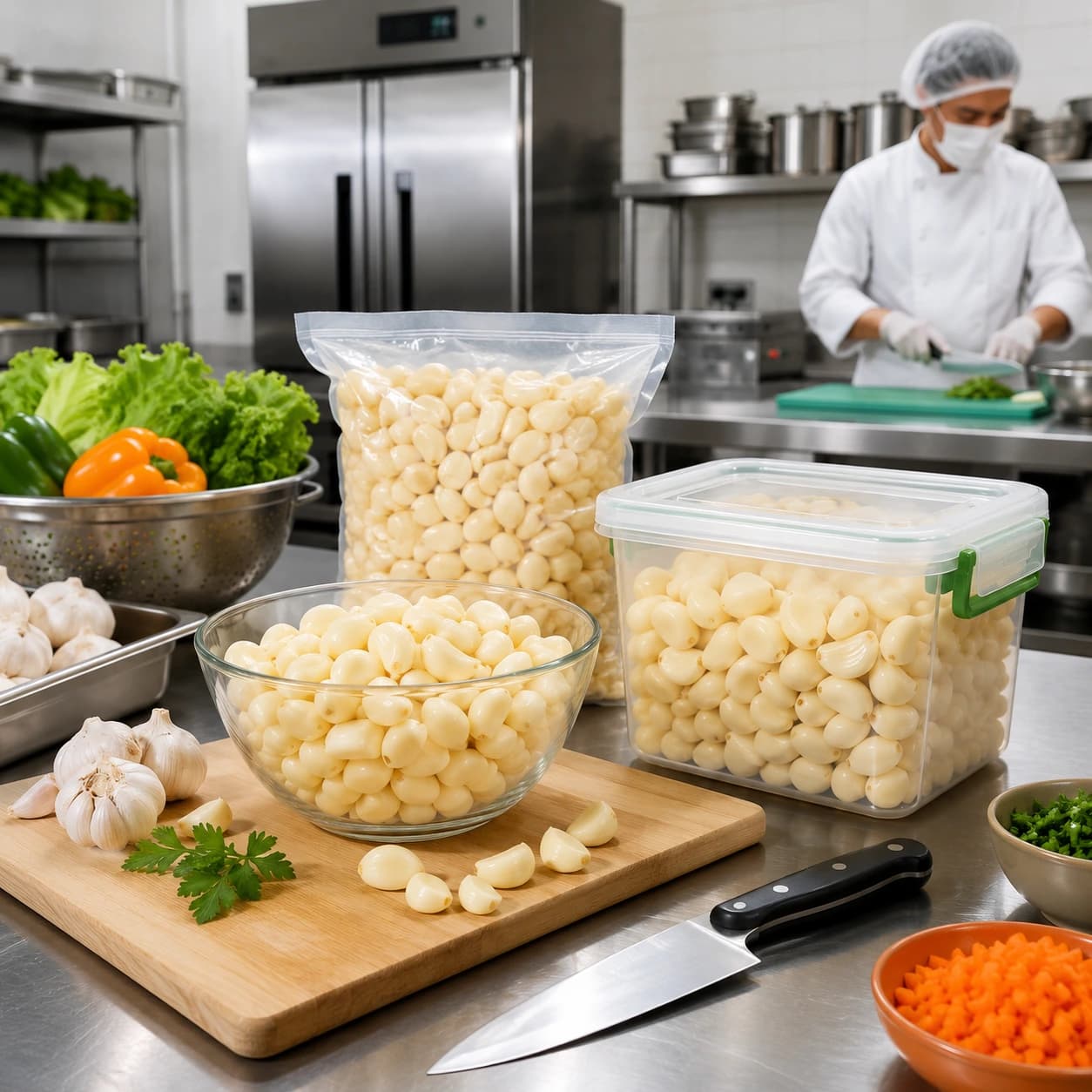
After inspection, peeled garlic is packaged according to the processor's product specifications.
Packaging helps protect the garlic during handling, storage, and transportation.
Commercial buyers may encounter different packaging sizes and formats depending on the supplier.
Packaging should be suitable for food contact and provide the necessary product information, including relevant handling instructions and traceability details.
Food businesses should select packaging formats that match their operational needs and expected usage.
Step 7: Storage and Distribution
Peeled garlic is a perishable food ingredient.
Its storage requirements depend on the processing method, packaging system, and product specifications.
For fresh refrigerated peeled garlic, maintaining the supplier's specified storage conditions is important throughout distribution.
Food businesses should check product labels, receiving conditions, and storage instructions rather than assuming all peeled garlic products have the same shelf life.
Why Understanding Garlic Processing Matters
For restaurants and food manufacturers, understanding the processing journey supports more informed purchasing decisions.
It helps buyers evaluate the importance of hygiene, product specifications, packaging, and traceability.
It also highlights why peeled garlic should be treated as a prepared food ingredient requiring appropriate handling.
Final Thoughts
Commercial peeled garlic processing involves several stages, from raw bulb selection and clove separation to peeling, inspection, packaging, and distribution.
Each stage contributes to the condition and suitability of the final product.
Looking for Peeled Garlic for Commercial Food Preparation?
Contact BLP Fresh Pack to discuss available peeled garlic products, packaging options, and supply requirements for your business.
Contact Us TodayMore Articles
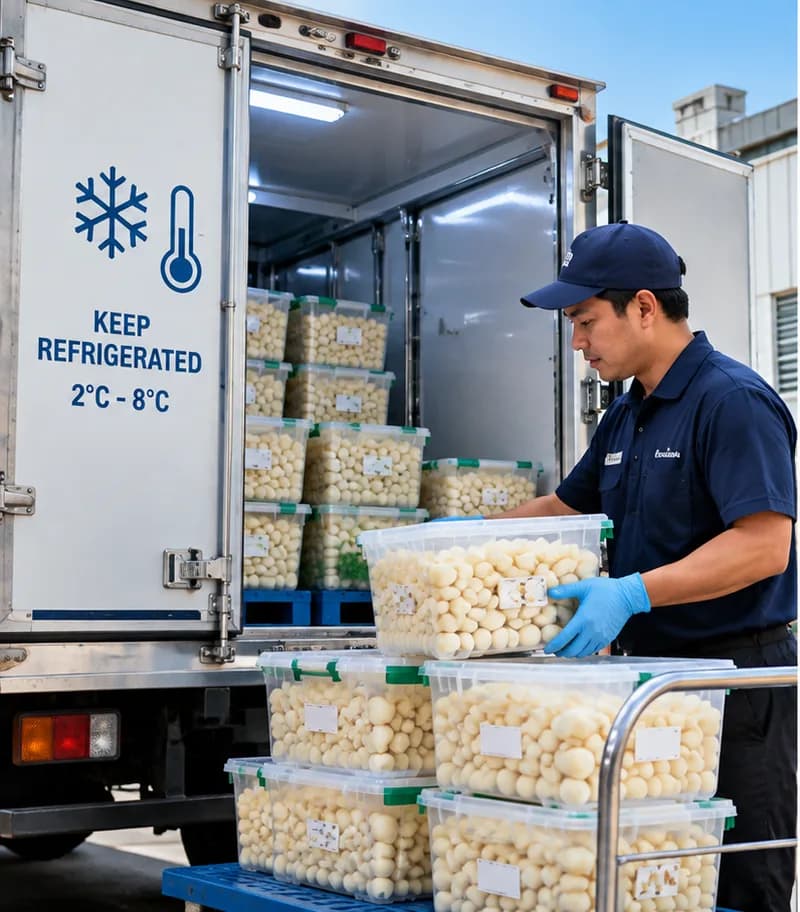
Why Cold Chain Management Matters for Fresh Peeled Garlic Delivery
November 2026 · 6 min read
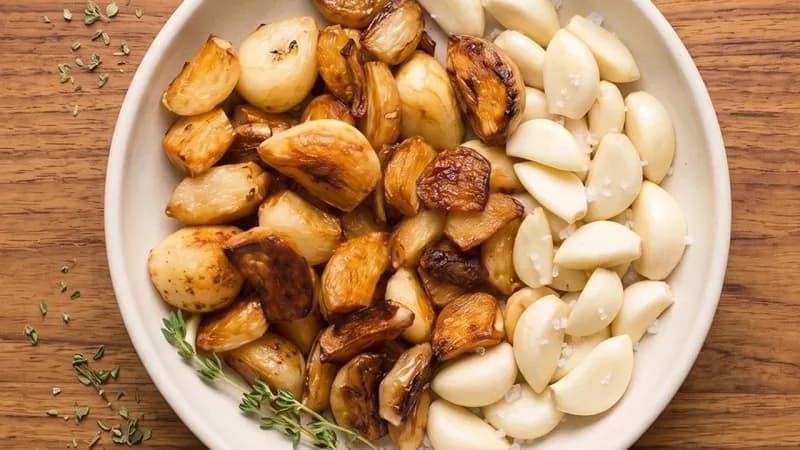
Roasted Garlic vs Raw Garlic: How Cooking Changes Flavour and Aroma
October 2026 · 5 min read
How Restaurants Can Maintain Consistent Garlic Flavour Across Every Dish
October 2026 · 6 min read
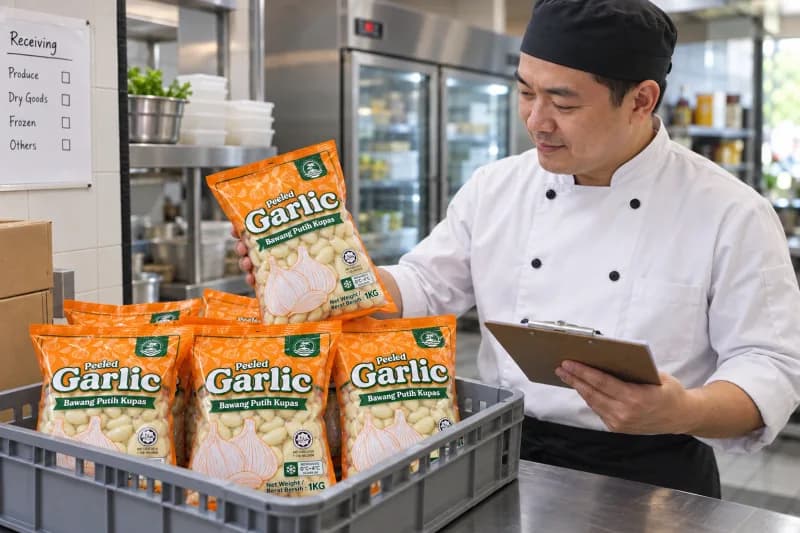
Buying Peeled Garlic in Bulk: What Restaurants Should Consider Before Ordering
September 2026 · 8 min read
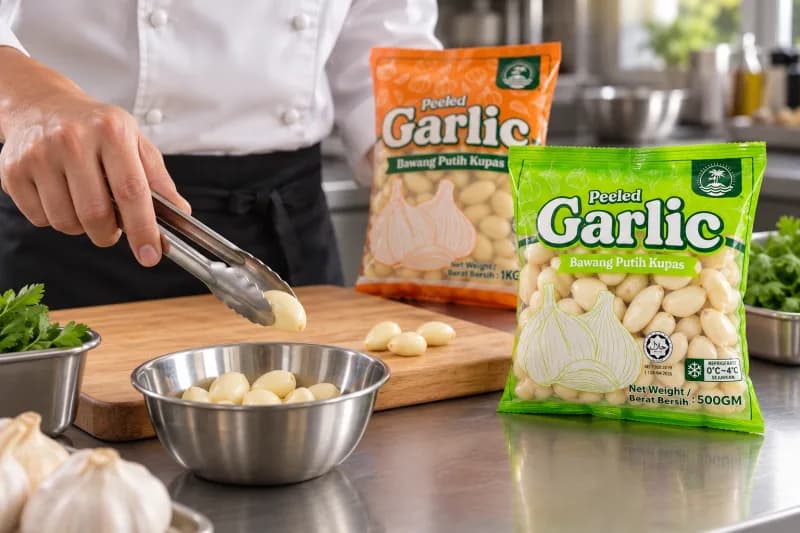
How to Store Peeled Garlic to Keep It Fresh for Longer
September 2026 · 7 min read
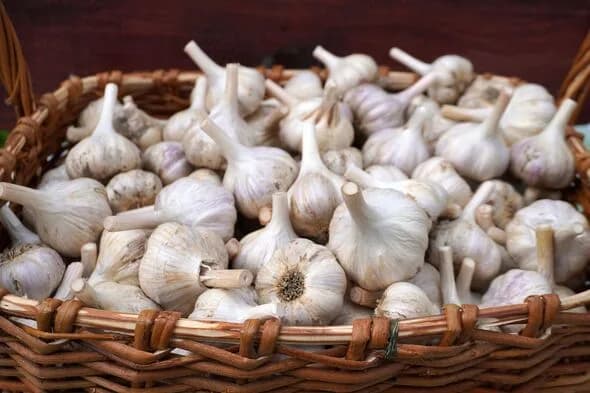
Why Food Manufacturers Choose Fresh Peeled Garlic for Efficient Production
August 2026 · 9 min read
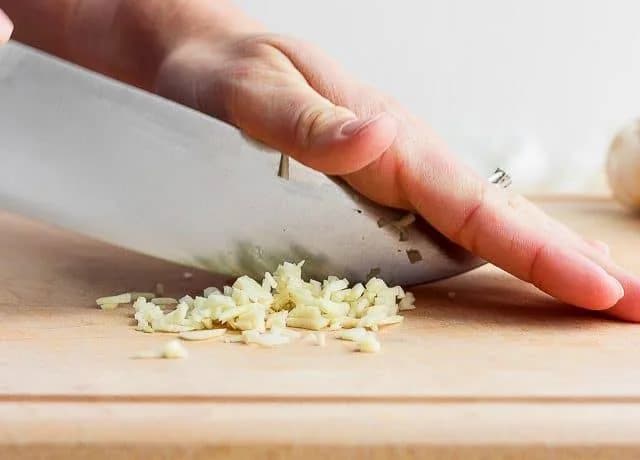
How Restaurants Can Reduce Labour Costs with Peeled Garlic
August 2026 · 8 min read
Fresh Peeled Garlic Supplier in Malaysia: Why Businesses Choose Quality and Convenience
July 2026 · 7 min read
Fresh Garlic vs Peeled Garlic: Which Is Better for Restaurants and Commercial Kitchens?
July 2026 · 6 min read
5 Ways Peeled Garlic Can Save Time in a Busy Kitchen
May 2026 · 4 min read
Simple Garlic Stir-Fry Recipe for Everyday Cooking
April 2026 · 3 min read
Why Food Businesses Should Use Ready-to-Use Peeled Garlic
March 2026 · 5 min read