
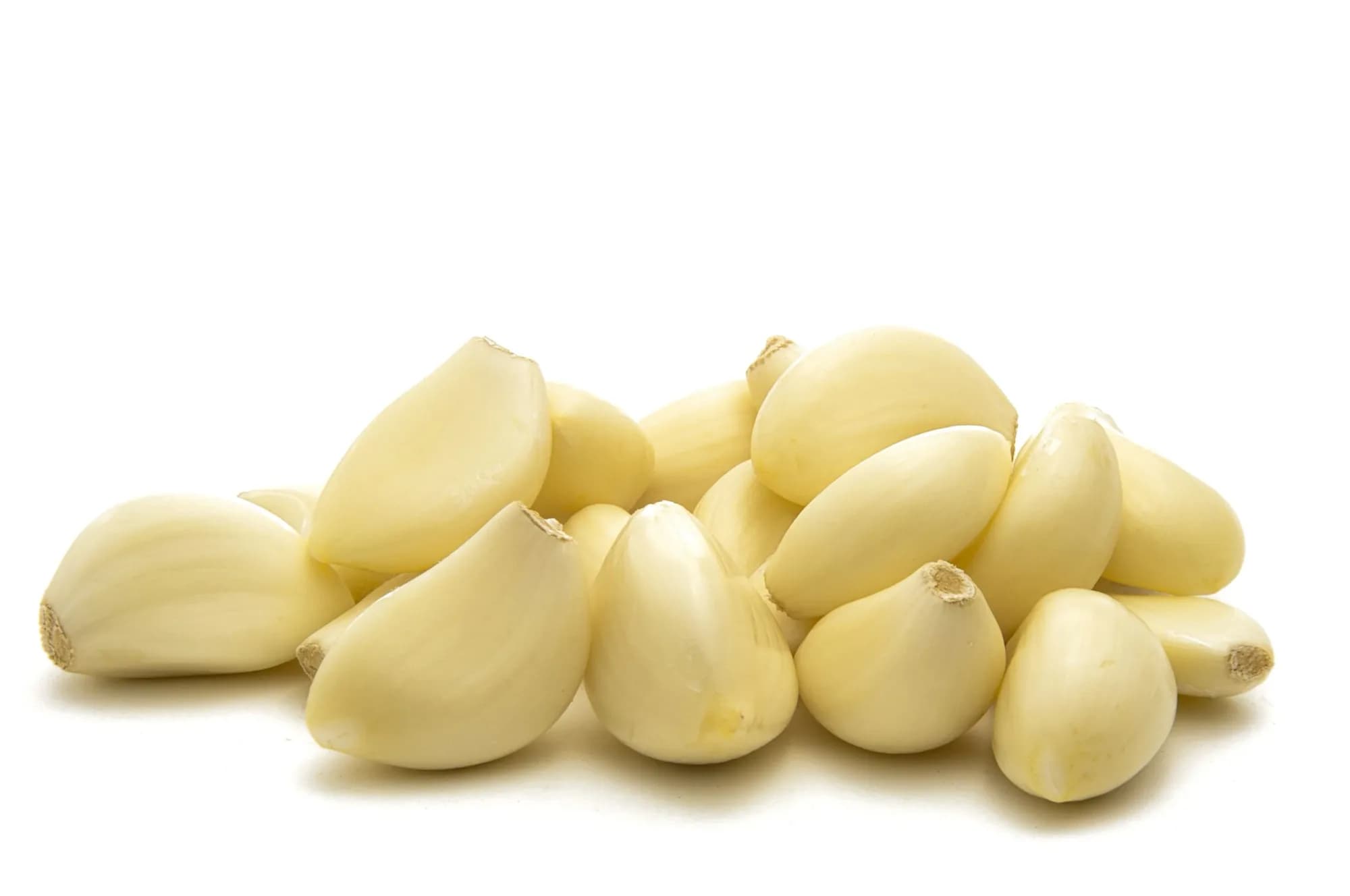
Buying Peeled Garlic in Bulk: What Restaurants Should Consider Before Ordering
Bulk buying peeled garlic isn't simply about ordering more. Learn how restaurants should weigh actual usage, storage, delivery frequency, packaging, stock rotation, and supplier consistency before placing a bulk order.
For restaurants that use garlic every day, purchasing decisions are about more than simply choosing an ingredient.
Order quantity, storage capacity, delivery frequency and supplier reliability can all affect how smoothly ingredients move from receiving to preparation.
This becomes particularly important when buying peeled garlic in bulk.
Ordering larger quantities can be practical for restaurants with consistent garlic usage, but buying more is not automatically better. The right purchasing approach depends on how much the kitchen actually uses and how effectively the business can manage its stock.
Before placing a bulk order, here are several factors restaurants should consider.
1. Understand Your Restaurant's Actual Garlic Usage
The first question is simple: how much garlic does the kitchen actually use?
The answer should ideally come from purchasing and kitchen records rather than estimates.
Restaurants can review garlic consumption over several weeks and identify their typical usage. Businesses with changing menus or seasonal demand may need to look across a longer period.
Factors that can influence consumption include:
- Number of dishes containing garlic
- Average daily covers
- Portion requirements
- Weekday versus weekend demand
- Catering or event orders
- Seasonal menu changes
Understanding actual consumption provides a better starting point for deciding how much peeled garlic to order.
It can also help procurement teams avoid purchasing based purely on assumptions.
2. Match Bulk Orders to Available Storage
A restaurant may have the demand for a large order, but does it have the appropriate space to store it?
Storage capacity should be considered before increasing purchasing quantities.
Fresh peeled garlic needs to be stored according to the instructions provided with the product. Restaurants therefore need to account for available refrigerated storage alongside all the other ingredients used by the kitchen.
An order that takes up too much storage space can create problems elsewhere in the operation.
Before ordering, consider both how much garlic the restaurant can use and how much it can appropriately store.
The two figures may not always be the same.
3. Consider Delivery Frequency, Not Just Order Size
Bulk purchasing does not necessarily mean ordering the largest possible quantity at once.
For some restaurants, receiving suitable quantities more regularly may work better than holding a very large amount of stock.
This is where delivery arrangements become an important part of supplier selection.
Procurement teams can consider questions such as: How frequently does the restaurant need garlic? How much does it typically use between deliveries? How much storage space is available? And what ordering pattern best fits kitchen operations?
The goal should be to establish an ordering cycle that reflects the restaurant's actual consumption rather than simply maximising the size of each purchase.
4. Look at Packaging When Purchasing Peeled Garlic
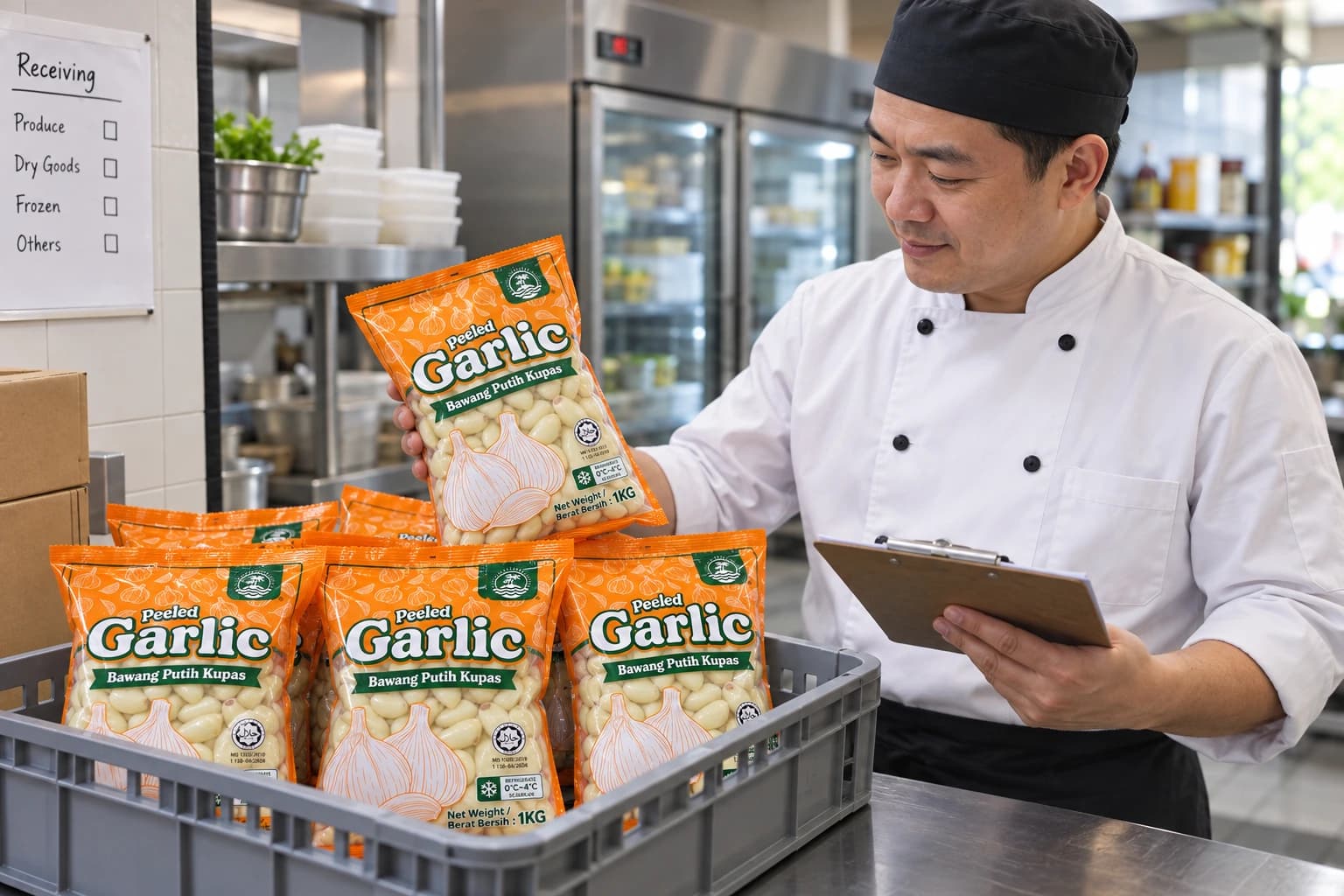
Packaging can influence how practical a product is to receive, store and use.
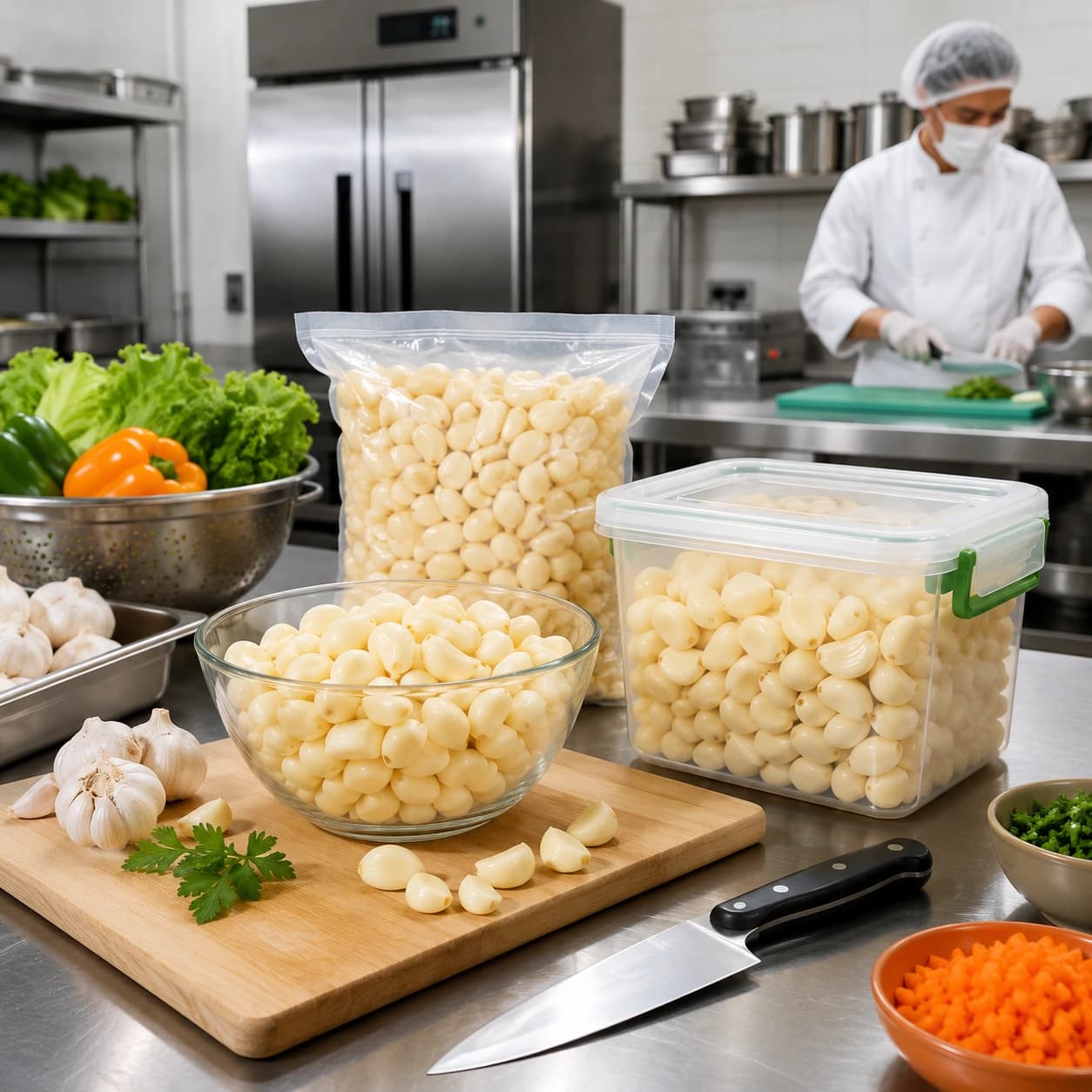
For commercial kitchens, appropriately packed peeled garlic can make stock organisation more manageable and help protect the product before it is required for preparation.
Restaurants should consider how individual packs correspond with their typical usage.
For example, the quantity used by a high-volume restaurant may differ significantly from the requirements of a smaller café or catering operation.
The right packaging arrangement should therefore complement the way the kitchen operates.
Businesses should also check product information and follow the supplier's instructions regarding storage and handling before and after opening.
5. Have a Clear Stock-Rotation System
Buying ingredients in larger quantities makes inventory control increasingly important.
Restaurants can use a first-in, first-out (FIFO) approach so that suitable older stock is used before newer deliveries.
Keeping product information and relevant dates visible can also help kitchen teams identify which stock should be used first.
A straightforward process might include checking products when they arrive, storing them promptly according to supplied instructions, organising stock by delivery or relevant date, and rotating it consistently.
The process does not need to be complicated.
What matters is that the team follows it consistently.
6. Consider Demand Fluctuations
Restaurant demand rarely stays exactly the same throughout the year.
Weekends may be busier than weekdays. Festive periods can affect customer volumes. Promotions, catering bookings or menu changes may temporarily increase ingredient requirements.
A purchasing plan should have enough flexibility to accommodate these changes.
Instead of assuming one fixed quantity will always be suitable, restaurants can monitor consumption and adjust orders when necessary.
This is particularly useful for businesses with several outlets or changing production requirements.
7. Evaluate Consistency When Choosing a Supplier
When an ingredient is used frequently, supply consistency matters.
A restaurant that builds its purchasing process around regular peeled garlic deliveries needs confidence that its supplier can support its operational requirements.
This is why comparing suppliers purely on price may provide an incomplete picture.
Commercial buyers can also consider product quality, packaging, communication, ordering arrangements and consistency of supply.
The aim is not simply to find garlic at the lowest possible unit price. It is to establish a supply arrangement that works reliably with the restaurant's purchasing and kitchen processes.
8. Coordinate Procurement and Kitchen Teams
The person ordering ingredients is not always the person using them.
That can create a gap between purchasing decisions and actual kitchen requirements.
Kitchen teams may notice that garlic consumption has increased, while procurement records still reflect previous ordering patterns. Alternatively, purchasing teams may order larger quantities without knowing that available kitchen storage is limited.
Regular communication between procurement and kitchen teams can help businesses make better purchasing decisions.
Kitchen staff can provide information about actual usage and operational needs, while procurement teams can manage ordering schedules and supplier communication.
Together, they can establish quantities that better reflect real demand.
Bulk Purchasing Is About Planning, Not Simply Buying More
Buying bulk peeled garlic for restaurants should ultimately be an inventory decision.
Larger quantities only make sense when they correspond with consumption, suitable storage and an appropriate delivery schedule.
Restaurants can therefore approach bulk purchasing by answering four practical questions:
- 1How much do we use?
- 2How much can we appropriately store?
- 3How frequently should we receive it?
- 4Can our supplier reliably support those requirements?
Answering these questions creates a much stronger purchasing strategy than simply ordering more because the price appears attractive.
Looking for Bulk Peeled Garlic in Malaysia?
For restaurants that use garlic consistently, the right supply arrangement can make ingredient purchasing easier to manage.
BLP Fresh Pack supplies fresh peeled garlic for commercial customers in Malaysia.
Restaurants considering bulk peeled garlic can assess their usage, storage requirements and preferred ordering frequency before discussing their requirements with a supplier.
A well-planned purchasing approach helps ensure that the quantity ordered reflects what the kitchen actually needs—turning bulk purchasing from a simple buying decision into a more organised part of restaurant procurement.
Planning a Bulk Peeled Garlic Order?
Contact BLP Fresh Pack to discuss bulk fresh peeled garlic supply, packaging and ordering frequency for your restaurant or commercial kitchen in Malaysia.
Contact Us TodayMore Articles
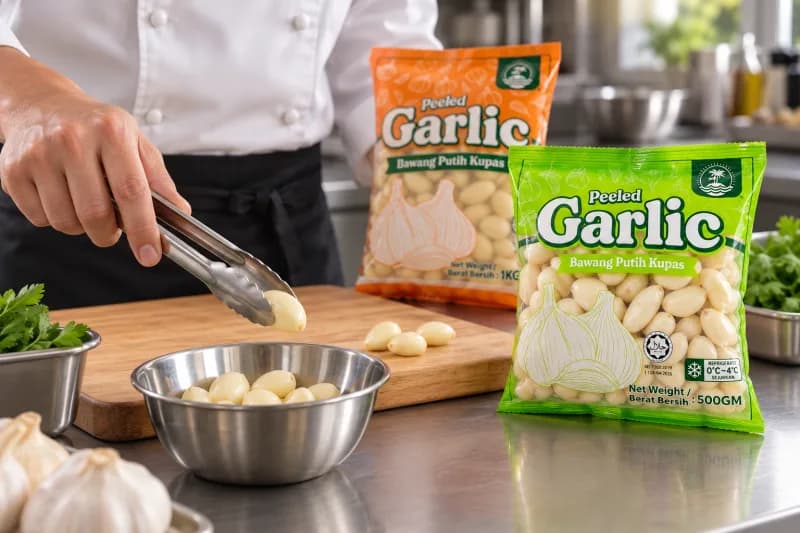
How to Store Peeled Garlic to Keep It Fresh for Longer
September 2026 · 7 min read

Why Food Manufacturers Choose Fresh Peeled Garlic for Efficient Production
August 2026 · 9 min read
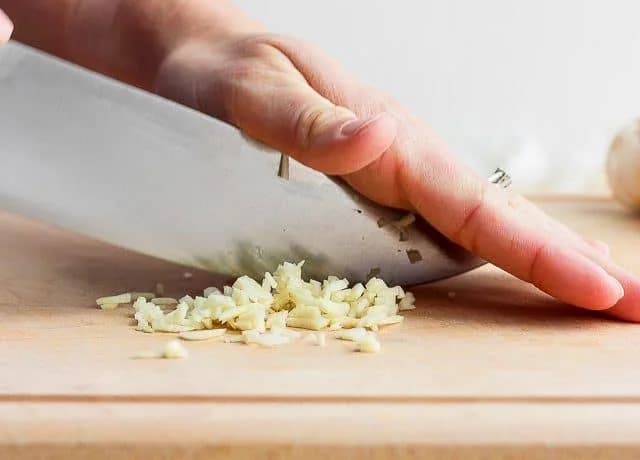
How Restaurants Can Reduce Labour Costs with Peeled Garlic
August 2026 · 8 min read
Fresh Peeled Garlic Supplier in Malaysia: Why Businesses Choose Quality and Convenience
July 2026 · 7 min read
Fresh Garlic vs Peeled Garlic: Which Is Better for Restaurants and Commercial Kitchens?
July 2026 · 6 min read
5 Ways Peeled Garlic Can Save Time in a Busy Kitchen
May 2026 · 4 min read
Simple Garlic Stir-Fry Recipe for Everyday Cooking
April 2026 · 3 min read
Why Food Businesses Should Use Ready-to-Use Peeled Garlic
March 2026 · 5 min read